Spring Street Subway

Written by

Published:

Modified:

For over a century the Spring Street Subway has stood as one of the city’s most controversial infrastructure landmarks. Built in 1909 to eliminate a deadly grade crossing where pedestrian traffic intersected with the bustling Reading Railroad yard; this landmark’s journey from concept to reality was defined by fierce public debate, scandal, lawsuits and a persistent flooding flaw that has turned the passage into a legendary local meme.

At the turn of the 20th century, the Reading Railroad was the industrial backbone of the city and expanding rapidly. In the immediate vicinity of Spring Street, more than 1,200 workers were employed at the railroad yards and surrounding shops. Due to the rail yard splitting the north west and eastern sections of the city, there was no easy way for pedestrians to get from one side the other. This led to many tragic deaths by those attempting to take a shortcut over tracks, sparking growing frustration among residents who demanded a safer crossing.

William Abbott Witman, select councilman for Reading’s 13th ward (between the rail yard and Hampden Reservoir), heeded his constituent’s pleas, and introduced the ordinance to make the subway a reality. If his name sounds familiar, it is because he is also responsible for constructing Reading’s iconic Pagoda

Local media’s coverage of discussions about building the subway began in 1904, but concerns about costs pushed the project back years. In October 1907, city leaders officially approved plans to construct an underpass beneath the Reading Railroad lines, estimated at a cost of $135,000 to be known as the Spring Street Subway.

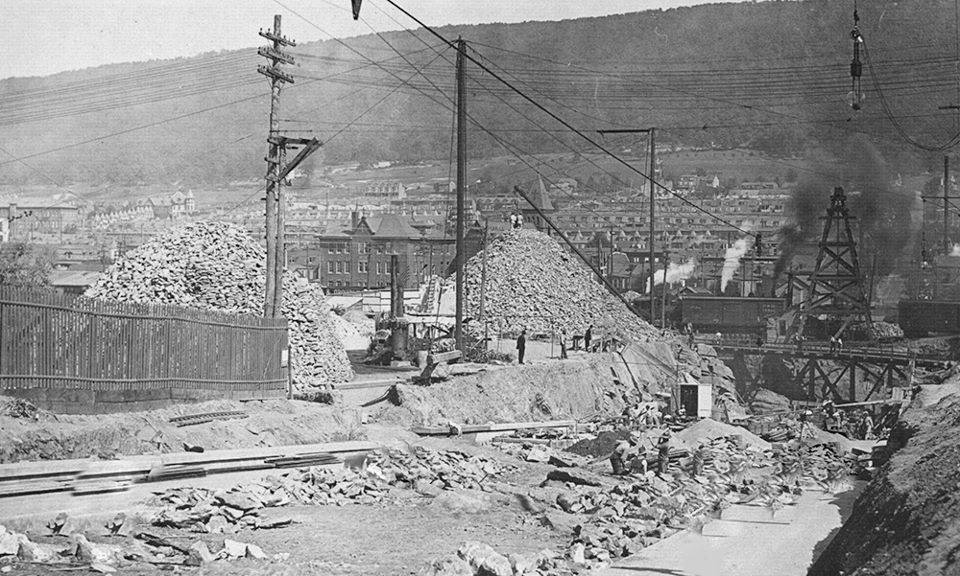
Spring Street Subway
Being Constructed in 1909

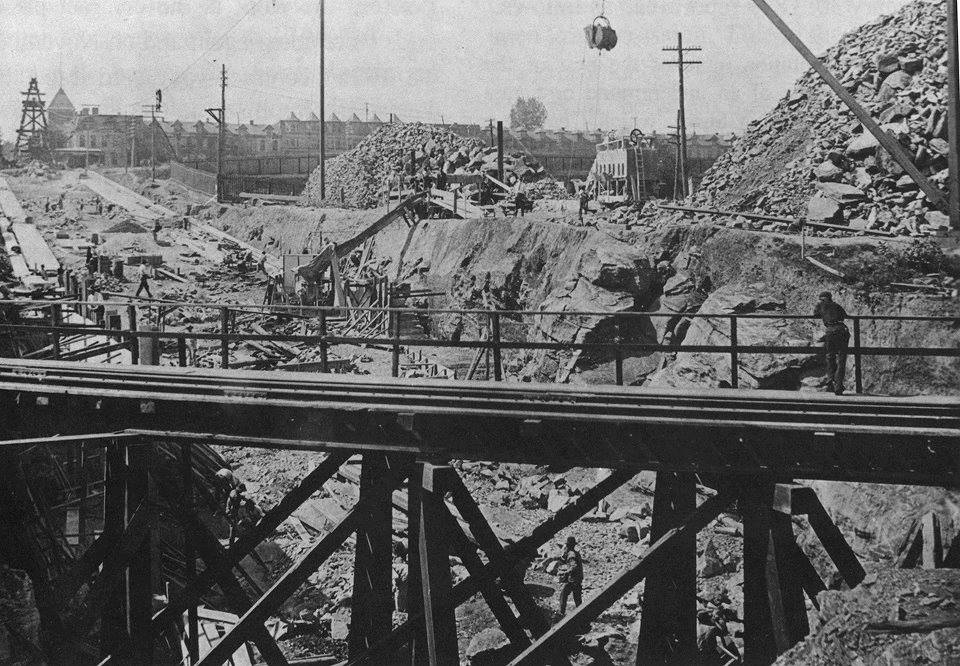
Constructing the subway was a massive civil engineering undertaking. Crews were tasked with excavating deep beneath live rail lines and erecting heavy steel girders and concrete support arches without disrupting the rail traffic running through the yard. Not long after excavation began the project was quickly embroiled in turmoil.

Local political figures, most notably William Abbott Witman, became central figures in heated public debates regarding city contracts, fund allocation, and accusations of political favoritism. High-profile conspiracy trials and lawsuits followed, alleging corruption in how the subway contracts were awarded and managed. Contractor Hawman Brothers countersued over delayed payments and altered terms. After the project was completed in 1910, contractors Penrose and Albert Hawman were charged and ultimately convicted of conspiracy along with City Engineer Elmer H. Beard, who approved their estimates of materials well in excess of what were actually used. The discrepancies amounted to over $30,000. All three were sentenced to one year in Berks County Prison for the crime.

Spring Street Subway
Being Constructed in 1909

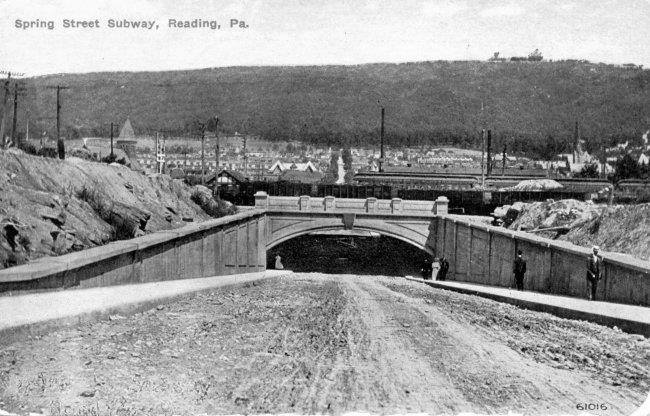
Despite the legal issues, construction reached completion in the Spring of 1909. The new structure provided a safe, grade-separated route beneath the tracks, eliminating the immediate threat of train collisions for pedestrians and vehicles traveling between northeast and west Reading. Yet while the subway succeeded in separating road traffic from rail lines, it introduced a new problem.

The subway was constructed at the bottom of a steep descending grade that began near 6th Street, positioned directly in the path of natural mountain runoff. Originally, surrounding unpaved dirt roads absorbed much of the rainwater. However, as Reading rapidly paved its streets in the early 1900s, surface runoff accelerated straight down the incline and into the subway portal.

Beginning right after its opening, moderate-to-heavy rainstorms regularly inundated the tunnel. Water levels inside the underpass frequently rose from 4 feet to over 10 feet deep, completely submerging vehicles, stranding motorists, and earning the subway a local reputation for turning into a lake during downpours.

June 26th, 1924 Reading Times

Beyond that, citizens complained it was too dark, and ridden with crime during the night. It was also the scene of many fatal accidents. Some of the higher profile incidents included Mrs. Hans Nolde accidentally hitting and killing a man with her car in 1918, and a City Employees being struck and killed there in 1921 and 1944.

The installation of more electrical lighting and a frequent police presence quelled some of the issues, but the flooding persisted. The only thing that has remained as constant as the subway’s propensity to flood has been the City’s hemming and hawing at doing something to remedy it.

Even back in 1911, immediately after its completion, our buddy William Abbott Witman was launching his mayoral platform on installing additional storm sewer drainage to stop it. The topic has been brought up in local media just about every decade since.

In 1961 State Representative Daniel F. McDevitt petitioned state highway authorities to assume financial responsibility for resolving the drainage flaw, arguing that Spring Street had been incorporated into the state highway system. Despite all the talking it doesn’t seem that any tangible solutions were ever implemented.

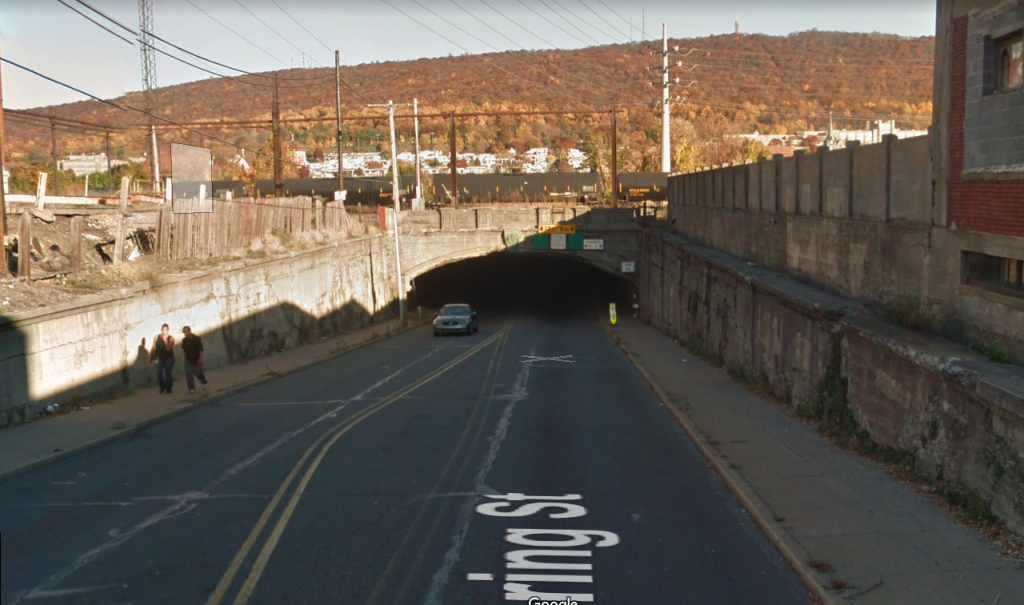
Screenshot

We can only guesstimate what overhauling the drainage system would cost today. Which has ultimately lead successive administrations to rely instead on temporary closures and pumping operations during severe weather instead of actually fixing the issue.

Today, even as train traffic on the overhead lines has significantly waned compared to the railroad’s peak era, the Spring Street Subway remains an active passage and an iconic piece of Reading lore. It stands as a testament to early 20th-century urban engineering, Reading’s historically epic corruption and political drama, and our innate human inability to learn from other’s mistakes. So next time it rains and you inevitably read about someone stranding their car in the Spring Street Subway, just smile and appreciate the legacy.

The Spring Street Subway in July 1940 and today [colorized]

Subscribe
Notify of
guest

4 Comments
Oldest
Newest Most Voted
Nanette B Merrill
Nanette B Merrill
8 years ago

I didn’t know the history of the “subway” as we called it. I walked that path many times home from Reading High, to and from the movies (before the porn in that theater) and also to the public library annex. That area is my childhood. Thanks.

James F Schifalacqua
8 years ago

It’s interesting to look up on the mountain in one of the pictures and see the hotel and original tower.

Faith Parmet
Faith Parmet
8 years ago

I am so surprised that after all these years, no one has figured out a way to put in good drainage so this would not flood. My in-laws lived in NE Reading, and many times, we went out of our way because of the subway being flooded, and this was over 40 years ago. I guess some things never change.

Mark Wisniewski
Mark Wisniewski
8 years ago

Walked as a kid going to the Strand.


Berks Nostalgia